

Sacroiliac Joint Fusion
Sacroiliac Joint Fusion
For patients with severe SI joint instability or persistent pain that does not improve with conservative treatment, minimally invasive sacroiliac joint fusion may be considered.
This procedure stabilizes the joint and reduces abnormal movement that can cause ongoing pain.
The SI joint causes back pain more often than many people realize. Clinical research has identified it as a pain generator in 15–30% of patients with chronic lower back pain. It is also a source of pain in up to 43% of patients who still have, or newly develop, lower back pain after a lumbar fusion.
Understanding the Sacroiliac Joint
The sacroiliac (SI) joints sit in the pelvis. They connect the iliac bones to the sacrum, the lowest part of the spine just above the tailbone. These joints transfer energy between your legs and torso every time you walk, climb stairs, or lift something.
Like any joint, the SI joint can be injured or wear down over time. When that happens, pain often settles in the buttock and can spread to the lower back, hips, and legs. It tends to flare during lifting, running, walking, or even lying on the affected side.
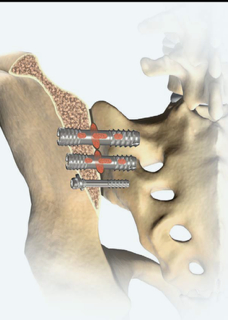
Benefits of SI Joint Fusion
- Stabilizes the sacroiliac joint
- Reduces abnormal motion that causes pain
- Provides long-term structural support
- Performed through small incisions with minimal downtime
SI joint fusion is typically recommended only after conservative treatments such as injections and radiofrequency ablation have been exhausted.

Signs You May Have SI Joint Dysfunction
Sacroiliac joint pain can mimic disc problems, hip pain, and other spine conditions, so a proper diagnosis is essential. Common symptoms include:
- Pain in the lower back or buttocks
- Discomfort when sitting for extended periods, or shifting to sit on one side
- Pain when standing up from a seated position
- Radiating pain into the hips, groin, or thighs
- Numbness, tingling, or weakness in the legs
- A feeling that your leg may buckle or give way
- Disrupted sleep due to pain
- Increased pain during walking or weight-bearing activities
How SI Joint Pain Is Diagnosed
At Nona Spine and Pain Institute, we perform a comprehensive diagnostic evaluation to determine whether your symptoms come from the SI joint or another spinal structure.
Your evaluation may include specific physical exam tests along with X-rays, CT, or MRI imaging. Imaging helps rule out other common pain sources, such as the lumbar spine or hip joints. This matters because conditions like disc problems can exist alongside SI joint dysfunction.
The most common way to confirm the SI joint as the source of pain is a diagnostic injection. Using X-ray or CT guidance, a local anesthetic is placed directly into the joint. If your pain drops by at least 75%, the SI joint is likely the source of your pain or a major contributor to it.

SI Joint Fusion With the iFuse INTRA X® Allograft Implant System
Physical therapy, medications, and injections bring meaningful relief for many patients, but that relief is often temporary. When non-surgical care no longer holds, we offer the iFuse INTRA X® Allograft Implant System, an ultra-minimally invasive approach to stabilizing the SI joint.
The iFuse INTRA X system is designed to stabilize the SI joint and promote fusion. Here is how the procedure works:
- It is performed entirely through one small incision in the lower back.
- Using a bone access needle, two small cylindrical implants made of bone allograft (donor bone tissue) are placed into the SI joint.
- Each implant is just 3.5 mm wide and 20 mm long, smaller than a dime.
- The procedure typically takes less than an hour.
Once in place, the implants support the joint as it fuses. The goal is to reduce or eliminate pain.
Backed by a Leader in SI Joint Care
iFuse INTRA X is made by SI-BONE, the company that created the original iFuse Implant for minimally invasive SI joint fusion. More than 100 peer-reviewed publications have studied the iFuse Implant's safety, durable effectiveness, and biomechanical benefits.
Is iFuse INTRA X Right for You?
SI joint fusion is not the right choice for every patient, and not every patient will benefit from it. The first step is a consultation. We review your symptoms, diagnostic results, and treatment history, then determine whether you are a good candidate.
Important safety information: The iFuse INTRA X® Allograft Instruments are indicated for placement of the iFuse INTRA X Allograft. The iFuse INTRA X Allograft is indicated for homologous use. There are potential risks associated with the iFuse INTRA X Allograft Implant System. It may not be appropriate for all patients and all patients may not benefit. For information about the risks, visit si-bone.com/risks.

Sacroiliac Joint Pain Treatment in the Orlando Area
Living with sacroiliac joint pain can significantly affect your mobility, sleep, and overall quality of life. At Nona Spine and Pain Institute, we specialize in advanced treatments including:
- Sacroiliac joint injections
- Sacroiliac joint radiofrequency ablation
- Minimally invasive SI joint fusion with iFuse INTRA X®
Our goal is simple: reduce pain, restore stability, and help you return to normal movement with confidence.
Take Back Your Stride With Sacroiliac Joint Fusion in Orlando
SI joint pain doesn't have to decide how you sit, sleep, or move. Our interventional pain specialist, Dr. Bharat C. Patel, can help you find out whether sacroiliac joint fusion is your path to lasting relief.
If you were one of Dr. Patel's patients before, you've found him: he now cares for patients at Nona Spine and Pain Institute, and he would be glad to see you again. Contact us today or call 407-326-6898 to schedule your SI joint evaluation.